
Why a Kitchen Remodel Timeline Matters
A kitchen remodel is one of the most impactful home improvements you can make — but it's also one of the most disruptive. For weeks, your daily routine changes. You're washing dishes in the bathroom sink, microwaving meals in the living room, and wondering if you'll ever see your countertops again.
The good news? When you know what to expect ahead of time, the process becomes far less stressful. Whether you're planning a full kitchen gut or a significant layout change in your Lauderdale-By-The-Sea home, this timeline guide will walk you through each phase so there are no surprises along the way.
How Long Does a Kitchen Remodel Take?
The honest answer: it depends. A straightforward kitchen remodel — new cabinets, countertops, flooring, and fixtures without moving walls or plumbing — typically takes 6 to 10 weeks from demolition to completion. More complex projects involving structural changes, permit approvals, or custom cabinetry can stretch to 12 to 16 weeks or longer.
Here in South Florida, a few local factors can also influence your timeline:
- Permit processing times — Broward County and local municipalities have their own review schedules, and some permits require multiple inspections throughout the project.
- Material lead times — Custom cabinetry, imported tile, and specialty countertops can take weeks to arrive, especially during peak renovation season.
- Hurricane season considerations — Scheduling a remodel between June and November means your contractor should have a plan for weather delays and material protection.
Phase 1: Design and Planning (2–4 Weeks)
Before anyone picks up a hammer, the most important work happens on paper. During this phase, you'll work with your contractor to finalize the layout, select materials, and establish a realistic budget.
Key steps during planning include:
- Taking precise measurements of your existing kitchen
- Choosing cabinetry styles, countertop materials, tile, flooring, and fixtures
- Finalizing the floor plan and any structural changes
- Ordering materials with long lead times (custom cabinets often take 4–6 weeks to fabricate)
- Pulling necessary permits from the local building department
This is also the time to set up a temporary kitchen space. A folding table, your coffee maker, a microwave, and a mini fridge in another room will make the coming weeks much more manageable.
Phase 2: Demolition (2–5 Days)
Once permits are approved and materials are ordered, demolition begins. This is the fastest — and loudest — phase of the project. Old cabinets, countertops, flooring, and sometimes walls come out. If you're changing the layout, this is when the space starts to look dramatically different.
Your contractor should protect the rest of your home during demo by sealing off doorways with plastic sheeting and controlling dust. In many Lauderdale-By-The-Sea homes, especially older properties near the beach, demolition sometimes reveals hidden issues like outdated wiring, corroded plumbing, or moisture damage behind walls. A good contractor addresses these problems immediately rather than covering them back up.
Phase 3: Rough-In Work (1–2 Weeks)
This is the behind-the-scenes phase that most homeowners don't think about, but it's critical. Rough-in work includes:
- Electrical — Adding or relocating outlets, installing wiring for under-cabinet lighting, and upgrading circuits to handle modern appliances
- Plumbing — Moving supply lines and drains if the sink, dishwasher, or refrigerator are changing locations
- HVAC adjustments — Rerouting ductwork if walls have been moved
- Framing — Building new walls, soffits, or structural supports
Inspections happen at the end of this phase. Work pauses until the building inspector signs off, which is another reason permit timelines matter in your overall schedule.
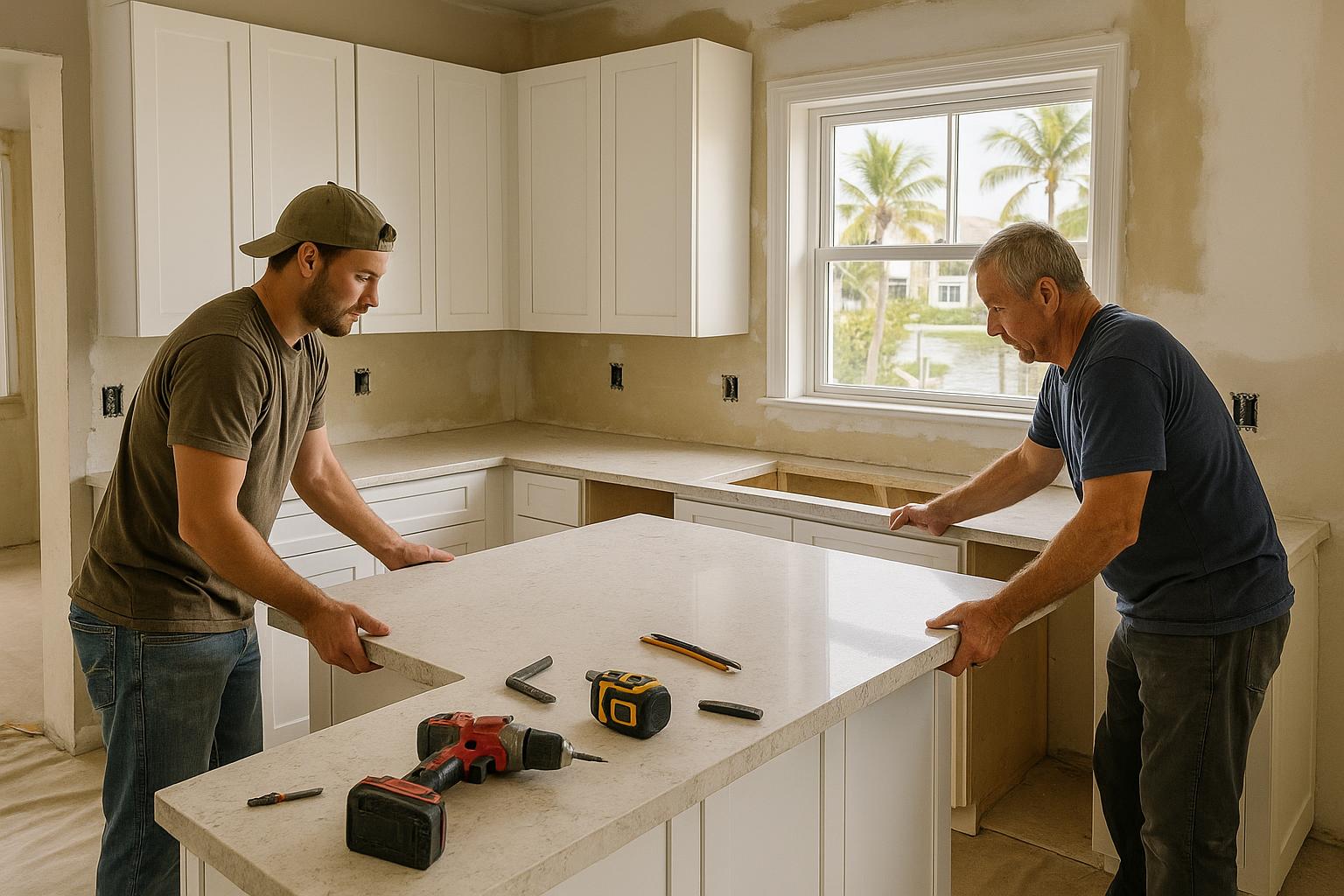
Phase 4: Cabinet and Countertop Installation (1–2 Weeks)
Once rough-in work passes inspection and walls are closed up with new drywall, the kitchen starts coming together. Cabinets are installed first — this is the moment the room begins to feel like a kitchen again.
After cabinets are set and leveled, countertop fabricators come out to make final measurements. If you've chosen natural stone, quartz, or another custom surface, there's usually a 1 to 2 week wait between templating and installation. Your contractor should account for this gap in the overall schedule.
Phase 5: Flooring, Tile, and Finishes (1–2 Weeks)
With cabinets and countertops in place, the finishing work begins. This phase includes:
- Tile backsplash installation and grouting
- Flooring installation (tile, luxury vinyl plank, or hardwood)
- Painting walls and ceilings
- Installing trim, crown molding, and cabinet hardware
For homeowners in coastal areas like Lauderdale-By-The-Sea, material choices matter here. Porcelain tile, moisture-resistant flooring, and finishes rated for high-humidity environments will hold up far better than materials designed for drier climates.
Phase 6: Final Installations and Punch List (3–5 Days)
The home stretch. During the final phase, your contractor handles:
- Plumbing fixture installation — faucets, garbage disposal, dishwasher connections
- Electrical finish work — light fixtures, outlet covers, appliance hookups
- Appliance delivery and installation
- Final inspections with the building department
- A detailed walk-through with you to create a punch list of any remaining touch-ups
The punch list walk-through is your opportunity to flag anything that isn't perfect — a paint touch-up needed here, a cabinet door that needs adjusting there. A reputable contractor welcomes this step because it ensures you're completely satisfied before the project is officially closed out.
Tips for Keeping Your Remodel on Schedule
Delays happen, but many of them are preventable. Here's how to help your project stay on track:
- Make material selections early. Changing your mind on cabinets or countertops mid-project is the single biggest cause of delays.
- Be available for decisions. Your contractor will have questions throughout the process. Quick responses keep things moving.
- Trust the process during the messy middle. Weeks two through four often feel chaotic. That's normal. The transformation happens fast once finishes go in.
- Work with a licensed general contractor. A contractor who manages all the subcontractors, permits, and inspections under one roof eliminates the scheduling headaches that come with hiring trades separately.
Ready to Start Planning?
If you're a homeowner in Lauderdale-By-The-Sea, Fort Lauderdale, Pompano Beach, or the surrounding area, understanding the remodel timeline is the first step toward a kitchen you'll love. At Summit General Contractors, we guide our clients through every phase — from initial design to final walk-through — so the process is as smooth and predictable as possible.
Have questions about your kitchen project? Reach out to our team for a consultation. We'll help you understand what your specific remodel involves and build a realistic timeline you can count on.